Does the University of North Carolina Force All Student to Read and Discuss the Koran?
In 2002, UNC's summertime reading committee asked Carl Ernst to recommend a translation of the Qur'an that incoming students could comprehend and talk over at length. Ernst, a religious studies professor, could recommend merely one—Michael Sells' Budgeted the Qur'an—because information technology included thirty brusque, poetic capacity that he felt would not overwhelm incoming students. The committee took his recommendation, and a lot of people were furious.
Was UNC trying to convert students to Islam? Wasn't the book pick insensitive and arrogant in lite of the nine/xi attacks? Wasn't discussing the Qur'an tantamount to teaching a specific religion to students?
A controversy erupted. The national press swooped in. There was even a lawsuit to force UNC to carelessness its selection. But the university stood firm. More two thousand incoming students read and discussed Sells' volume without incident. At i session, Ernst eyed reporters standing at the back of a room full of students and said he wished tomorrow's headline would be, "Students read books, hash out ideas."
Ernst was confused past the backlash. "People assume that if something is being discussed at the university, then it'south existence endorsed," he says. "That'due south non what we're about. Having students read books is what we do hither."
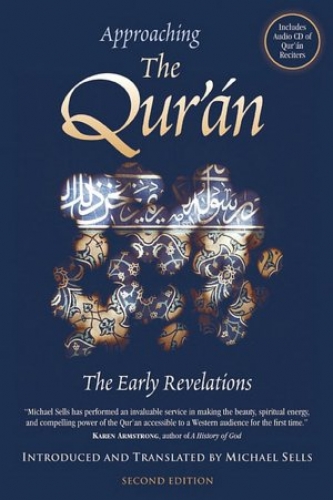
Click to read photo explanation.
The summer-reading blowup got to him. "It showed me that misunderstanding the Qur'an was a serious problem," he says. Radicals take a few lines out of context and promote the virtually farthermost estimation possible, which gets the most press. Ernst says Westerners are left uninformed and oftentimes antagonistic toward a book they know petty about.
When publishers approached him about writing a translation of his own, Ernst agreed. But it wouldn't be a directly translation or a theological introduction to the Qur'an. His book would present the Qur'an equally a piece of literature steeped in historical context.
"A lot of people want to know what the Qur'an 'says' on particular issues, bold it has a consistent position," Ernst says. "The reality is that the Qur'an addresses different audiences and changes its method of advice over time." The Qur'an—sometimes poetry, sometimes prose—was revealed over twenty-three years to pagans in Mecca and and then to others, including Jews and Christians, in Medina. "So readers need to sympathize its historical context and the fashion information technology was constructed," he says.
When Ernst started writing his book, titled How to Read the Qur'an: A New Guide, with Select Translations, he didn't set out to accost any theological arguments, simply in a fashion he's done just that.
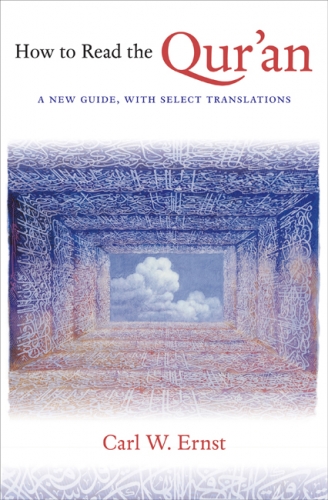
Click to read photograph explanation. courtesy of UNC Press
He says the Qur'an is full of an ancient literary style that allows readers to pinpoint the central meaning of long and sometimes disruptive passages. Using this tool, called ring limerick, Ernst plant a major theme of the Qur'an that would surprise people who don't know much about Islam—and even some people who do.
Confusing construction
It'south tough to but selection up the Qur'an and start reading. "Anyone who gets though the first 20 pages is very self-disciplined," Ernst says. "It's not easy to read."
That'south because the Qur'an isn't organized similar other books, especially other religious texts. The Gospels, for instance, are chronological accounts of the life and teachings of Jesus. The Book of Revelation is mystical prophecy. The Qur'an, on the other hand, is presented as a series of 114 messages, or suras. And they were not put to paper in chronological lodge.
The longest suras were revealed toward the end of Muhammad'due south life, but they appear at the offset of the Qur'an. The shortest suras, which are poetic and often cryptic, were revealed at the get-go of Muhammad's ministry building. But they appear at the end of the Qur'an.
"If y'all get-go reading the Qur'an at the start, information technology's sort of similar reading a mystery novel by starting with the last affiliate," Ernst says. In How to Read the Qur'an, he sorts all that out.
Ernst shows how the suras evolved over xx-iii years into long passages of prose total of allusions to the Hebrew Bible, the New Testament, the Talmud, and even the apocryphal writings of Christianity.
Those references can confuse modern readers, Ernst says. For instance, sura 5 mentions the Israelites seeking the Promised Land later fleeing captivity in Egypt. Only two of them enter Canaan—Caleb and Joshua. "But the Qur'an doesn't mention them past name," Ernst says. "Information technology only mentions 'the two.' This leads me to believe that the initial audition of this sura knew the text of the Hebrew Bible very well." And that audience, he says, likely included Jews and Christians. Today's more secular readers, though, might not empathize the reference to "the two."
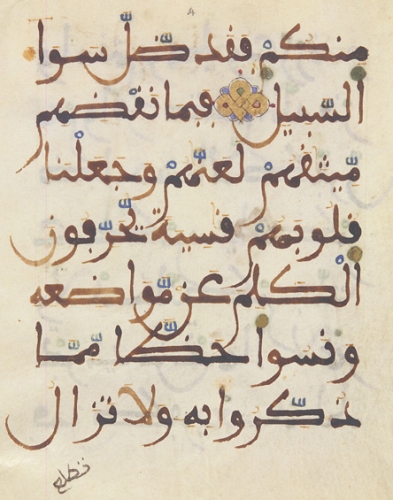
Click to read photograph caption. Wikimedia Commons
In his book, Ernst makes sense of such references for readers and shows how the Qur'an would've been understood by the people of 7th-century Arabia. This approach is not typical.
For centuries, scholars and theologians have organized the central points of Qur'an according to theme. This way, they can tell readers what the Qur'an "says" about specific issues. But that can be difficult because the Qur'an—if viewed as a single slice of revelation—is full of contradictions and paradoxes. Interpreters had to concoct the so-called doctrine of abrogation to pinpoint what the Qur'an actually says about a item outcome.
Abrogation essentially boils downwards to one verse trumping the validity of another. This, Ernst says, is problematic for several reasons.
In sura 9, for instance, in that location'due south a command for warfare confronting unbelievers. Today, "unbelievers" could mean anyone who's non a Muslim. But Ernst and most scholars say Muhammad was referring to war against Meccan pagans who were tormenting Muhammad'southward start followers. Muhammad conspicuously considered Jews and Christians to be believers. He even referred to them as "People of the Volume." Modern-24-hour interval Islamist radicals don't make that stardom, and neither do people antagonistic toward Islam.
Through the centuries, many Qur'anic commentators have said this so-called "sword verse" in sura 9 trumps the many verses pertaining to forgiveness for pagan unbelievers and acceptance of Jews and Christians. "Some legal scholars argue that the sword poetry abrogates over 100 verses that incorporate peace treaties and counsels of tolerance," Ernst says. "I observe it rather unsatisfactory that such an extreme reading requires one to disregard big chunks of text."
Making matters worse, sometimes contradictory statements appear within the same passage. Sura 60, for instance, advises believers to avert condign allies with those who make state of war against them. Simply then information technology mentions how believers and disbelievers can establish friendships.
How are readers to make sense of this? Some scholars suggest we're non supposed to. Some say sura threescore is equanimous of fragments from two unlike sets of revelation. Just the contradictions within one passage forcefulness believers to pick which verse to have to heart.
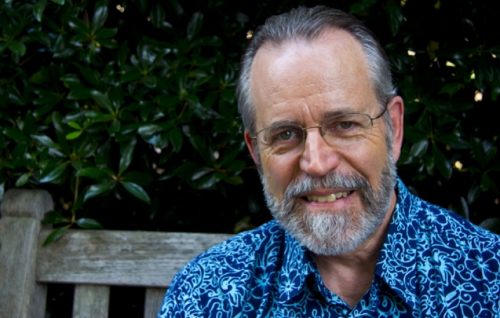

Click to read photo explanation. photograph credit: Marker Derewicz
Ernst's research reveals another caption for sura threescore and how to approach seemingly contradictory verses. Readers have to understand how the text was structured before interpreting its meaning.
Lord of the rings
Modern readers are used to books presented in a clear, linear way. Only some ancient writers preferred to structure their texts symmetrically. Scholars telephone call this "ring composition."
Imagine a 13-verse passage. In band composition, the first and last lines of the passage refer to each other, the second and second-concluding lines refer to each other, the third and third-last lines refer to each other, and then on. Those verses introduce a theme, call attending to normally held beliefs, and frame an issue until the principal point of the text is revealed at the centre. In a passage of 13 verses, line seven is the mathematical center. That'south where the most important point is.
Ernst starting time heard of band limerick twenty years ago when an Indian scholar reported finding it in a fifteenth-century Sufi text written in Hindi, a language Ernst can't read. At first he was skeptical. "Information technology seemed like numerology or something similar that," he says, "and I was a niggling suspicious of seeing deep patterns where I wasn't certain they existed."
He didn't think about that Sufi text again until twelve years later—subsequently UNC's Qur'an controversy—when he met an Iranian scholar who said that Rumi, the dandy Sufi mystic, used ring composition in one of his treatises. This got Ernst'southward attention. He found that other modern scholars had institute ring composition in Homer's Iliad and other Greek works. Information technology'due south been found in Farsi texts. In India and Prc. It's been documented in Standard arabic poetry, including pre-Islamic works.
Ernst read a book called Thinking in Circles, in which anthropologist Mary Douglass showed that some of the less-studied books of the Hebrew Bible—Numbers and Leviticus, for example—comprise symmetrical structures. From there, Ernst found new scholarship on Paul'due south letters in the New Testament. They, too, feature ring limerick.
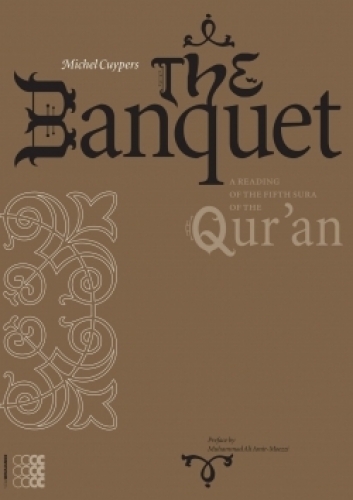
Click to read photograph explanation.
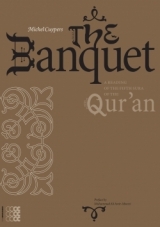
Ernst's radar was up, and while writing How to Read the Qur'an in 2009 he came upon a volume titled The Banquet, in which Belgian scholar Michel Cuypers provides bear witness that sura v contains a ring composition. At the structural middle of the long chapter is a well-known verse:
"For everyone, We have established a police and a mode. If God had wished he would accept made yous a single community. But this was and so He might test you regarding what He sent you. So effort to be beginning in doing what is best."
"What this means is that the institution of multiple religious communities is part of the divine program," Ernst says. "The goal is for believers—Jews, Christians, Muslims—to have a contest in ideals. They should endeavor to run into which community tin can follow the divine command to do good and avert evil."
This, he says, is a clear sanction for religious pluralism. And its place in the text shows that information technology was meant to have more weight than other verses that were meant to introduce and discuss themes and events.
"I've e'er noticed that passage," Ernst says. "But I never realized that it was such a primal indicate." It's literally the centre of a sura that scholars concord is i of the most important in the entire Qur'an. "And there are quite a few parallel passages to this one," he says.
The center of Islam
Information technology'southward hard to say why ring composition in aboriginal texts is just now being brought to the fore of academia, but Ernst says that the most plausible explanation is that over the course of centuries, more and more people became linear thinkers—A plus B equals C—until reading in a linear fashion became dominant. In fact, many scholars over the years have complained about the seemingly cluttered nature of ancient writings, Ernst says, "merely because the texts don't conform to modern tastes."
As for the Qur'an, viewing information technology as a slice of literature is a relatively modern method of research that demands a nontheological approach. Ernst says band composition is now being discussed at major bookish conferences in the United States. In Europe, 2 of the best-known Qur'an scholars—Angelika Neuwirth and Neal Robinson—have recognized that ring composition is prevalent within the Qur'anand that it demands farther research. And in the Eye Eastward, an American named Raymond Farrin has already uncovered the primal meaning of one of the Qur'an's longest suras.
In 2010, while Ernst was on a research get out to complete his book, Farrin, who teaches in State of kuwait, published an article analyzing the structure of sura 2. Farrin points out that information technology, too, features a ring limerick. This long sura, one of the last ones revealed, also boils down to a competition in virtue, during which believers—including Jews and Christians—should keep their faith.
Ernst says that not all of the Qur'an is structured using band composition. "It's also soon to say just how pervasive this is in the Qur'an," he says. "Much more piece of work needs to be washed, particularly with regard to the Medinan suras."
Just for his book Ernst tackled sura 60, the 13-verse passage that some scholars say was pasted together from carve up pieces of revelation.
"It was fifty-fifty better than I imagined," Ernst says. When viewed as a ring composition, the contradictory verses make sense. The outer verses refer to warfare against enemies and to Abraham'south battle with idol worshipers. But at the very center of the passage—verse number seven— is where the sura'south core message appears:
"Maybe it may be possible for God to create affection betwixt you and your enemies."
"It's simply so striking," Ernst says. "And when you run into it in the eye of a conflict that leads you to the heart, you have to say, that's quite remarkable."
These verses accept been well-studied and cherished by mainstream Muslims for centuries; religious pluralism is not a new notion for them. Just today, equally Islamist radicals aim to divide the believers of the God of Abraham, Ernst and others are providing strong evidence that religious pluralism is at the heart of the Qur'an. Information technology's not 1 sentiment amidst equals. "It is literally showing up every bit a cardinal theme," Ernst says.
Ernst's scholarship will probable not have any upshot on the hearts and minds of jihadists or people who dismiss Islam every bit a imitation religion. He'south well enlightened that detractors—some of the aforementioned people who attacked him and the academy during the 2002 summer reading controversy—volition accuse him of defending a brutal organized religion.
Ernst, though, says he's only a defender of reading, studying, and thinking.
"I'm non an apologist for the Qur'an in whatsoever sense," he says. For case, there'due south no question that the Qur'an, like many religious texts, addresses a civilization steeped in misogyny and patriarchy.
"My aim is understanding and explanation rather than advocacy or attack," he says. "My main hope is to heighten the level of discussion beyond the current impasse."
The Qur'an is an of import text for over a billion people. It has a history and a construction. "Permit's try to understand how information technology works," Ernst says. This is what professors effectually the country do with all kinds of books. They practise it with modern books, also. "This is what nosotros do," he says, "when nosotros teach the Bible as literature."
Source: https://endeavors.unc.edu/people_of_the_book
0 Response to "Does the University of North Carolina Force All Student to Read and Discuss the Koran?"
Postar um comentário